MDD090A-N-020-N2M-130PB2
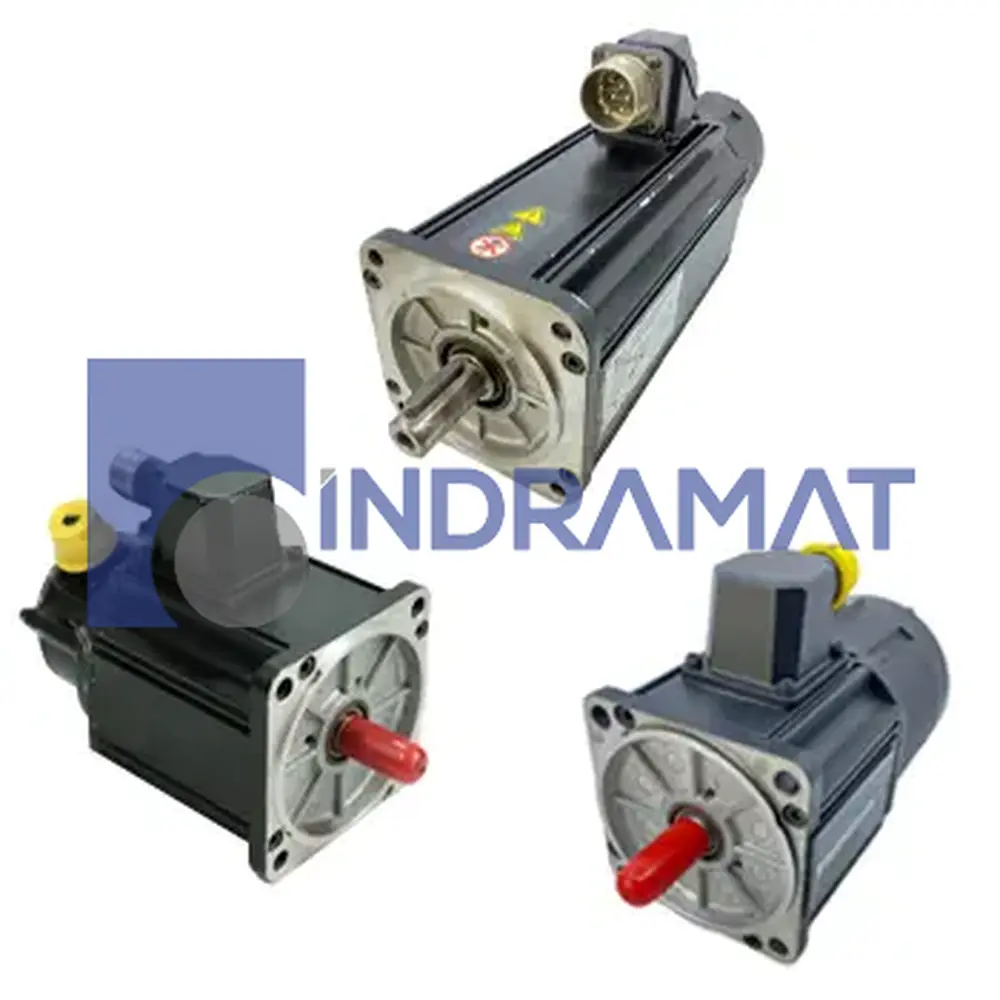
MDD Synchronous Motors
Technical Specifications
Balancing
Standard
Holding Brake
With blocking brake
Holding Brake Torque
11.0 Nm
Centering Diameter
130 mm
Housing
Standard
Encoder
Integrated multiturn absolute encoder
Motor feedback
Digital servo feedback (DSF)
Continuous Torque at Standstill
3.7 Nm
Motor Length Code
A
Motor Size
090
Nominal Speed
2000 min⁻¹
Shaft Seal
With shaft seal
Shaft Type
keyway
Connection Direction
Side B
Connection Type
Connector
Product Type
Motor for digital drive controllers
Shaft End
Standard (without side B shaft end)
Frequently Asked Questions
What is the impact of motor balancing “Standard” on vibration and long-term operation?
Standard balancing typically reduces major imbalance sources but is less precise than “precision” balancing; for high speed or very sensitive machinery (robotics, high precision packaging), residual imbalance could still cause vibration, bearing wear or noise.
How does the holding brake & continuous stall torque interplay under frequent stop-start operation?
Frequent stops put stress on the brake, which must engage and hold under load often; also, each stall (holding 3.7 Nm at zero speed) draws current and generates heat, so both brake life and thermal capacity of motor/drives must be verified for the expected stop-start duty cycle.
What are the consequences of the keyway shaft type for coupling and backlash?
A keyway shaft (per DIN standards) ensures positive mechanical coupling and high torque transmission without relying on friction alone; however, keyway introduces stress concentration, so shaft and coupling must be well-fit and aligned, and backlash in coupling should be minimized for precision motion
How does having a shaft seal influence maintenance and environmental use?
The seal helps exclude dust, dirt, and some moisture ingress, improving lifespan in harsher environments; but seals can add friction, and over time may wear, so you might see slight increases in torque required or dropped efficiency—seal maintenance or replacement might be necessary.
How does the nominal speed of 2000 min⁻¹ limit or enable dynamic performance (acceleration / deceleration)?
At 2000 rpm, the motor can respond fairly fast, but acceleration torque must overcome inertia; if your loads or mechanical linkages are heavy, you’ll need a drive that can supply enough current (beyond continuous torque) to handle transient torque demands.
Common Misspellings
MDD-090A-N-020-N2M-130PB2
MDD090A N 020 N2M 130PB2
MDD090A-N-020-N2M-130-PB2
MDD090AN020N2M130PB2
MDD90A-N-020-N2M-130PB2
MDDO90A-N-020-N2M-130PB2
MDDO9OA-N-O2O-N2M-13OPB2
Internal Product Review
The Bosch Rexroth MDD090A-N-020-N2M-130PB2 motor delivers 2000 min⁻¹ nominal speed with 3.7 Nm continuous torque at standstill and 11.0 Nm holding brake torque. Its integrated multiturn absolute encoder with digital servo feedback supports precise positioning and control. This motor is widely applied in robotics, packaging, and material handling systems.


Shipping & Payment Options








Warranty

Repair
 We offer a repair service for the MDD090A-N-020-N2M-130PB2.
 Want to