MDD093D-N-040-N2L-130PA2
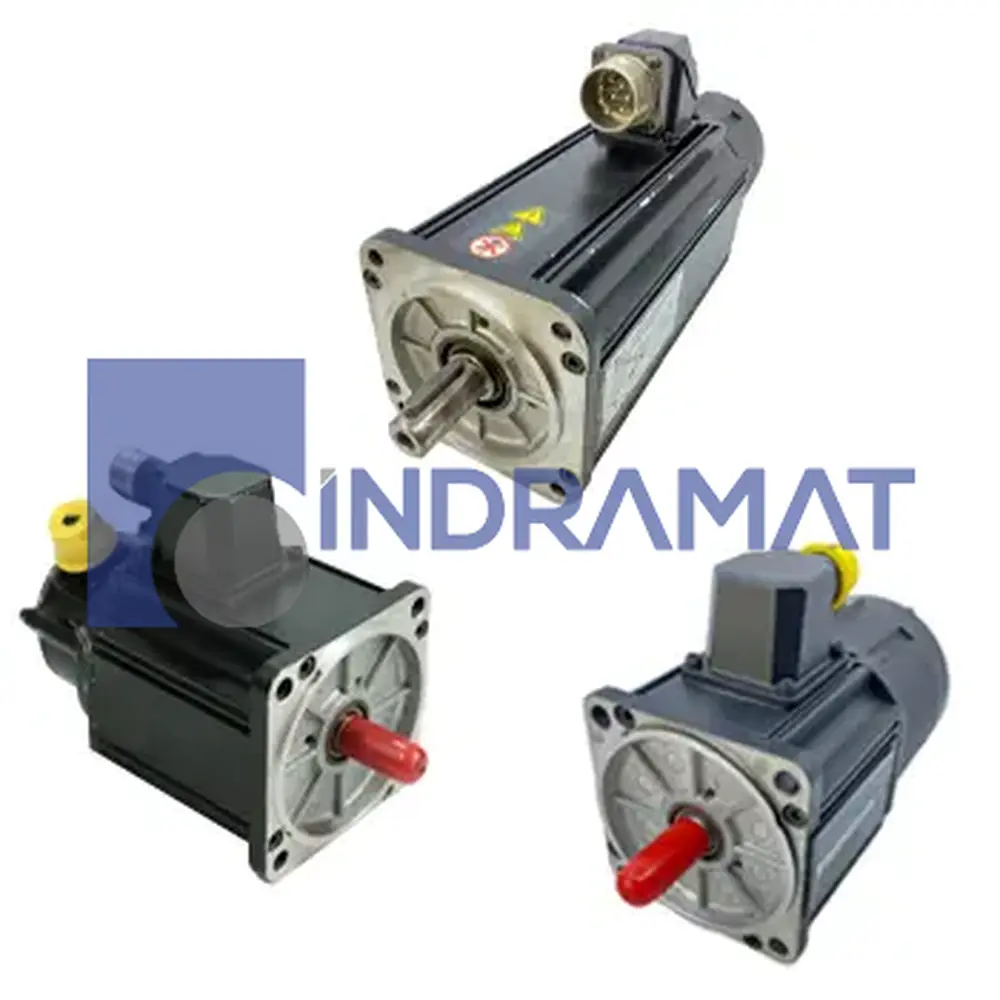
MDD Synchronous Motors
Technical Specifications
Balancing
Standard
Holding Brake
With blocking brake
Holding Brake Torque
22 Nm
Centering Diameter
130 mm
Housing
Standard
Motor Feedback
Digital servo feedback (DSF)
Continuous Torque at Standstill
24.0 Nm
Motor Length Code
D
Motor Size
093
Nominal Speed
4000 min⁻¹
Shaft Seal
With shaft seal
Shaft Type
keyway
Connection Direction
Side A
Connection Type
Connector
Product Type
Motor for digital drive controllers
Shaft End
Standard (without side B shaft end)
Frequently Asked Questions
In what way does digital servo feedback (DSF) improve closed-loop control over analog encoders?
DSF provides high-resolution, direct digital rotor position and speed signals with less noise and latency, enabling tighter servo loops. This reduces quantization error, enabling more precise motion and improved dynamics.
What challenges does using a keyway shaft introduce versus a smooth shaft in high-speed applications?
A keyway locally reduces shaft cross-sectional strength and can introduce stress concentration; at high rpm it may excite resonances or fatigue if not properly filleted. Careful key design, chamfering, and dynamic balancing are essential.
What effect would the blocking brake have on rotor dynamic response when switching from hold to motion?
The brake introduces friction and inertia during release, so the control algorithm must gradually ramp torque rather than instant full acceleration. Sudden release at high speed could cause transient torque spikes or overshoot.
How does the nominal speed of 4000 rpm constrain maximum useful mechanical bandwidth?
Because the motor runs at 4000 rpm (≈ 66.7 Hz electrical for a 2-pole design), the usable control bandwidth is generally some fraction (e.g. up to ~1–5 kHz) depending on drive electronics and load inertia. At higher frequencies the servo loop gains must be reduced to avoid instability.
How would mismatched inertia between the motor rotor and the load influence performance in CNC or robotics applications?
A large inertia mismatch (motor rotor much lighter than load) reduces acceleration, control bandwidth and raises the risk of overshoot; conversely, if rotor is much heavier, energy efficiency and responsiveness suffer. Design should aim for a load:rotor inertia ratio (usually ≤ 5:1) for optimal control.
Common Misspellings
MDD-093D-N-040-N2L-130PA2
MDD093D N 040 N2L 130PA2
MDD093D-N-040-N2L-130-PA2
MDD093DN040N2L130PA2
MDD93D-N-040-N2L-130PA2
MDDO93D-N-040-N2L-130PA2
MDDO93D-N-O4O-N2L-13OPA2
Internal Product Review
The MDD093D-N-040-N2L-130PA2 motor from Bosch Rexroth offers 24.0 Nm continuous torque and operates at a nominal speed of 4000 rpm. It features a keyway shaft, blocking brake, and digital servo feedback with a 130 mm centering diameter. This motor is commonly used in robotics, CNC machinery, and automated packaging systems.


Shipping & Payment Options








Warranty

Repair
 We offer a repair service for the MDD093D-N-040-N2L-130PA2.
 Want to