R911251021 (MDD090A-N-030-N2L-110GA0)
MDD Synchronous Motors
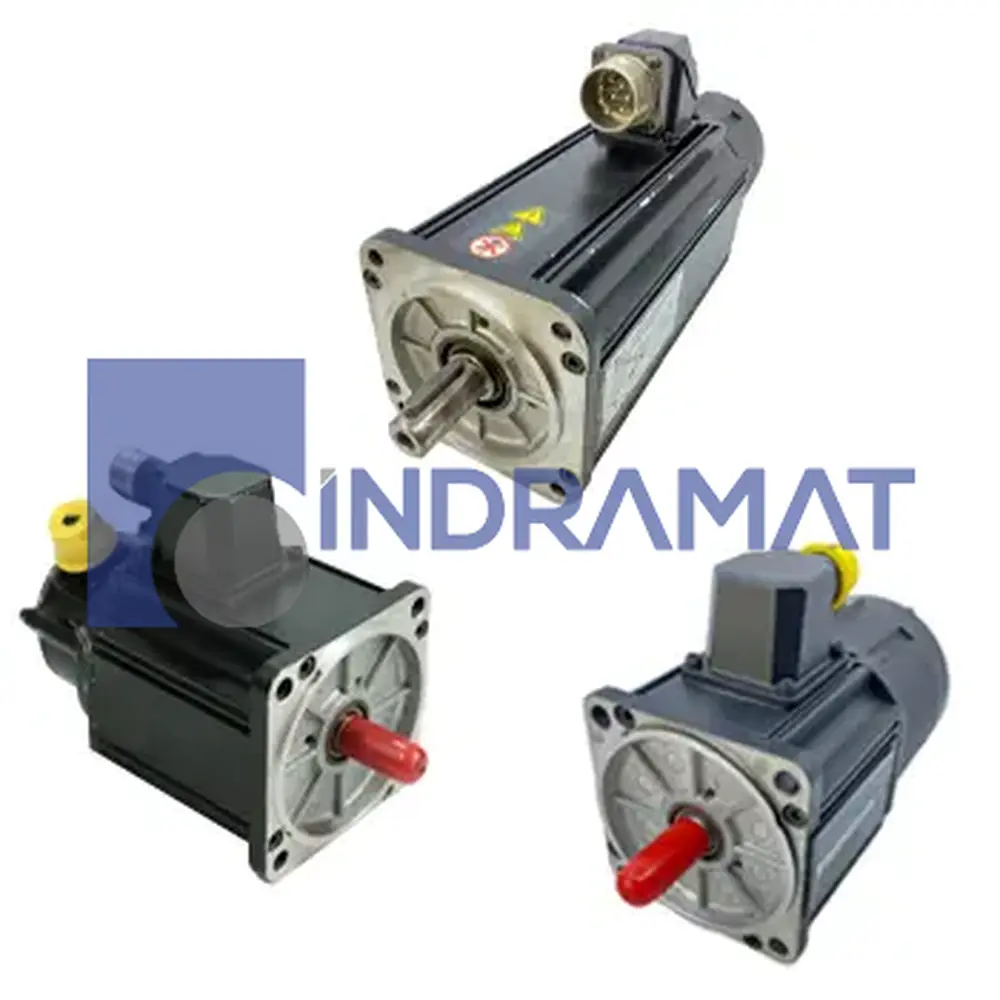
Technical Specifications
Design
Brushless
Brake
No blocking brake
Installation Altitude
Maximum 1000m above sea level
Protection Against Liquid Penetration
Not absolute
Position Shift Possibility
Yes, with helical teeth mounted drive pinions
Radial Shaft Cooling Support
Yes, with short construction
Housing Coat Durability
Low with frequent steam cleaning
Balance
Reduced balance class
Shaft End
Standard Side B
Data Storage
In motor feedback
Thermal Time Constant
45 minutes
Permissible Radial Force
Depends on point of application and average speed
Frequently Asked Questions
What real-world effect does the 3.7 Nm continuous torque at standstill have for acceleration in automation applications?
Because continuous stall torque determines how much instantaneous load the motor can hold without turning, it directly impacts how swiftly the motor can start under load; for example, heavier loads or high inertia axes may need a higher torque reserve to avoid sluggish acceleration or slipping. In practice, matching gear ratios or reducing inertia upstream improves responsiveness when using this motor.
How does the “plain shaft with shaft seal” influence maintenance and environmental protection?
The shaft seal helps prevent ingress of dust, oil, or coolant along the shaft, reducing wear on bearings and prolonging life in dirty or wet conditions; this also lowers maintenance intervals. However, the plain shaft (versus a flanged or keyed extended shaft) requires careful coupling alignment to avoid imposing radial or axial loads that could overload the seal or bearings.
What are the implications of the 110 mm centering diameter for mechanical integration?
The 110 mm centering diameter sets a critical interface for motor mounting flanges, coupling alignment, and mechanical repeatability; mating parts must match that diameter precisely for low runout. For retrofits or custom mounts, machining tolerances around this diameter are important to maintain performance and minimize vibration.
In what way does digital servo feedback affect control accuracy and speed stability?
Digital servo feedback (DSF) enables highly precise position/speed measurement with minimal latency; it improves closed-loop stability, reduces overshoot, and allows tighter control of speed under varying loads. For demanding tasks like CNC or robotics, this means more repeatable motion and better responsiveness during rapid acceleration/deceleration.
What performance constraints come from the nominal speed rating of 3000 min⁻¹?
The 3000 rpm nominal speed indicates the motor is optimized for continuous operation around that speed; pushing it significantly above may increase losses (iron, windage, friction) and reduce lifespan, while operating long below could lead to lower cooling efficacy. Selection of drive, gearing and load must ensure the motor spends most of its duty cycle within its optimal speed-torque band to avoid thermal overload.
Common Misspellings
MDD-090A-N-030-N2L-110GA0
MDD090A N 030 N2L 110GA0
MDD090A-N-030-N2L-110-GA0
MDD090A-N-030-N2L-110-GAO
MDD090A-N-030-N2L-110GAO
MDD090AN030N2L110GA0
MDD90A-N-030-N2L-110GA0
MDDO90A-N-030-N2L-110GA0
MDDO9OA-N-O3O-N2L-11OGAO
mdd090a-n-030-n2l-110ga0
Internal Product Review
The MDD090A-N-030-N2L-110GA0 motor by Bosch Rexroth provides 3.7 Nm continuous torque at standstill and runs at a nominal speed of 3000 min⁻¹. It features digital servo feedback, a plain shaft with seal, and a 110 mm centering diameter. This motor is commonly used in robotics, packaging systems, and CNC machinery.


Shipping & Payment Options








Warranty

Repair
 We offer a repair service for the MDD090A-N-030-N2L-110GA0.
 Want to