SERCOS Communication in Indramat Motion Control Systems
26 March, 2026 | SERCOS communication, SERCOS protocol, SERCOS motion control, Indramat SERCOS, Indramat motion control systems, SERCOS III Ethernet, industrial communication protocols, servo drive communication, real-time motion control, Indramat servo drives, SERCOS network setup, SERCOS controller communication, industrial automation communication, SERCOS interface, motion control networking
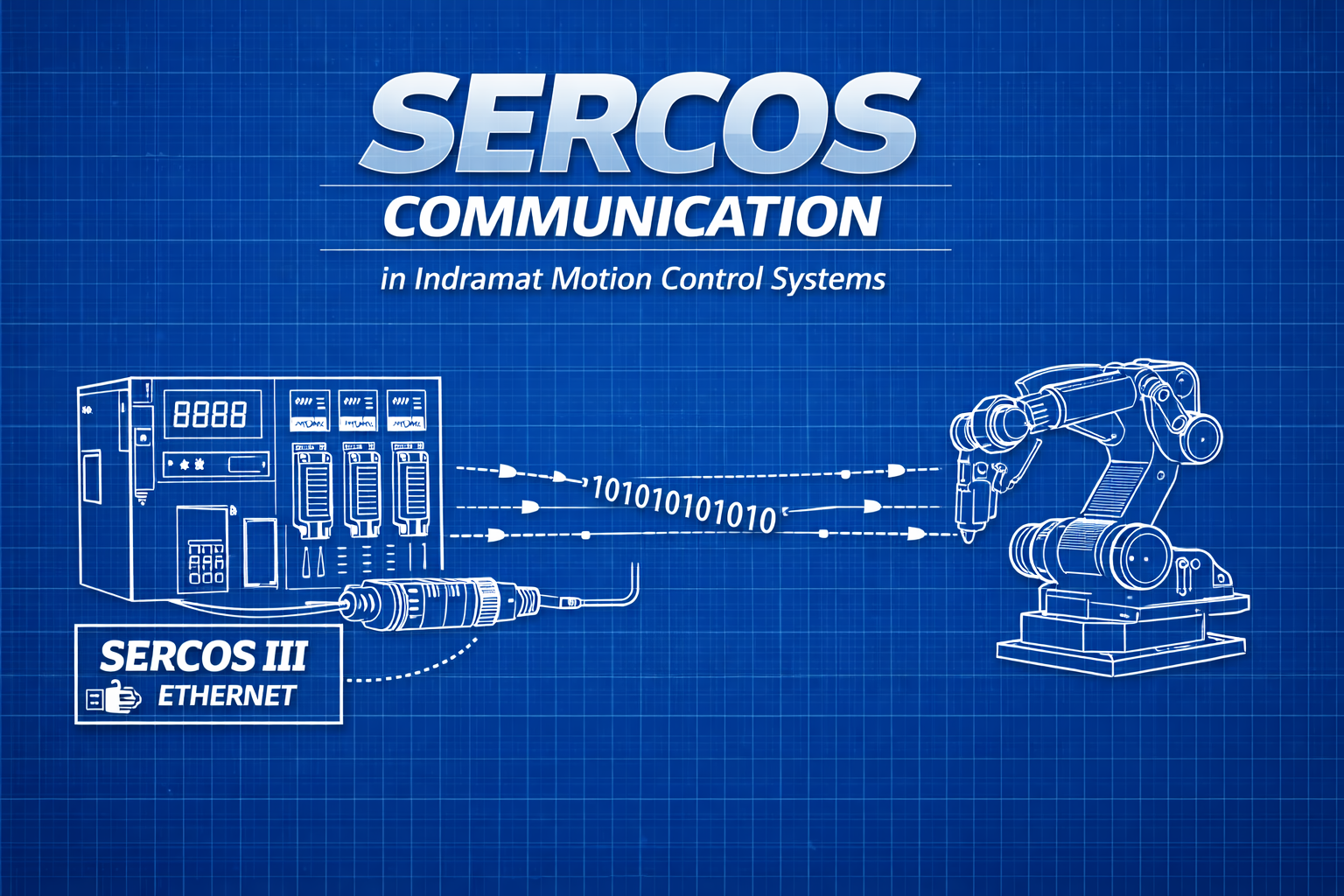
In high-performance automation, communication quality matters just as much as mechanical precision. That is a major reason SERCOS, or Serial Real-time Communication System, has remained important in demanding motion-control applications. Designed as an open industrial communication standard, SERCOS was built to keep drives, controllers, and related devices synchronized with predictable timing. It began as a fiber-optic communication platform for servo systems and later evolved into Ethernet-based architecture through SERCOS III, while still preserving the deterministic behavior that made it valuable in the first place.
In Indramat systems, SERCOS is not just a protocol mentioned in documentation. It is tied directly to the kinds of hardware that shape the way a machine operates. Control sections, drive controllers, axis inverters, and coupling units all play different roles in the communication structure, and that is what makes SERCOS easier to understand when it is discussed through real product examples instead of abstract network language alone.
Why SERCOS Was Developed
SERCOS was introduced to bring organized, real-time communication to industrial drive systems. One of its biggest strengths was its ability to support tightly coordinated motion while also creating a more standardized method for devices to exchange data. In practical terms, that meant more consistent commissioning, clearer parameter handling, and better long-term maintainability in systems where multiple axes had to work together.
That design philosophy is a big part of why SERCOS became so common in motion-heavy equipment. When a machine depends on precise synchronization, communication cannot be treated as an afterthought. It must be built into the structure of the control system from the beginning.
How SERCOS Works
At its core, SERCOS was developed for deterministic motion communication. Earlier versions used a fiber-optic ring bus at 2 and 4 Mbit/s, later expanding to 8 and 16 Mbit/s in SERCOS II. With SERCOS III, the standard moved to 100 Mbit/s Fast Ethernet, allowing it to keep its real-time motion advantages while using Ethernet-based infrastructure.
The protocol uses a master-slave communication model. The master defines the communication cycle, and slave devices exchange their information in a controlled sequence during that cycle. Real-time process data is passed through cyclic telegrams, while diagnostics and parameter access are handled separately. That structure is one of the reasons SERCOS has remained useful in machine tools, robotics, packaging systems, and other applications where coordinated axis movement is essential.
Because synchronization is built directly into the communication method, SERCOS is known for stable timing and very low jitter. Each device has a defined place inside the data structure, which helps maintain repeatable behavior from one cycle to the next.
Seeing SERCOS Through Real Indramat Hardware
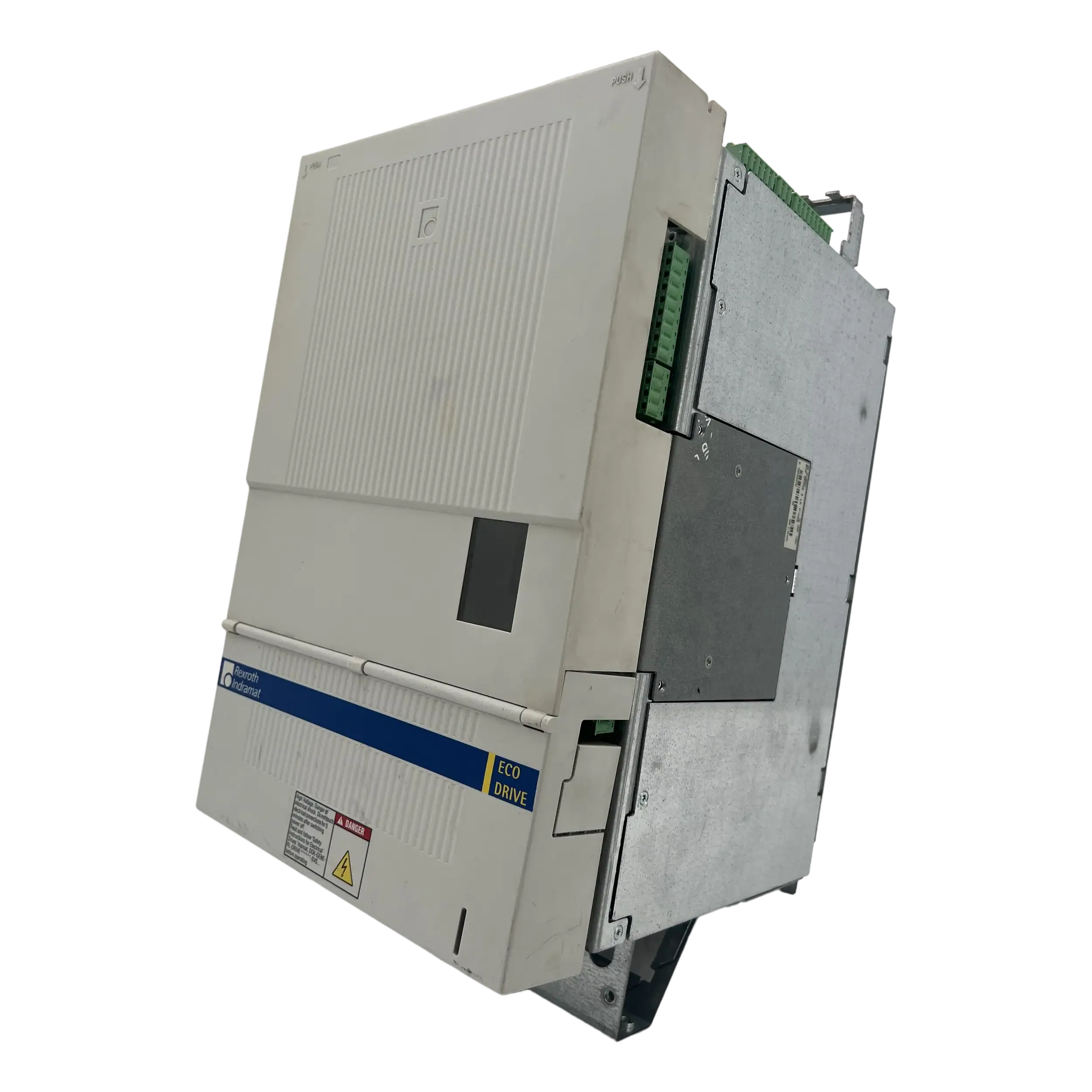
The easiest way to make SERCOS feel practical is to look at how it appears in actual Indramat components. On the control side, a unit such as the CSH01.2C-SE-EN2-NNN-CCD-NN-S-NN-FW shows how SERCOS can sit at the center of the motion architecture. This control module as supporting a master SERCOS communication interface, with data transfer rates up to 100 Mbps and support for ring, star, and daisy-chain topologies.
A drive controller gives a different view of the same communication role. The DKC02.3-200-7-FW, part of the DKC Drive Controllers series, it uses a SERCOS communication module and using a SERCOS interface as part of its design. In other words, the protocol is not limited to one family of Indramat hardware. It also appears directly in drive-control platforms that are responsible for motion execution.
A more modern example is the HMS01.1N-W0110-A-07-NNNN axis inverter. Which supports SERCOS and EtherCAT interfaces, which makes it a useful example of how communication flexibility became part of later Indramat drive architecture. When a machine builder or end user is working through replacement options, that sort of detail matters because the communication interface affects how well a unit fits into the installed control environment.
SERCOS also extends beyond the controller and drive layers. RMK02.2-LWL-SER-FW is a good example of how the protocol reaches into I/O structure as well. It is a SERCOS Coupling Unit that supports cyclic I/O data exchange, connects up to 15 I/O devices, and operates with a minimum SERCOS cycle time of 0.5 ms.
SERCOS I, II, and III
The development of SERCOS is generally divided into three generations. SERCOS I established the original fiber-optic communication concept and provided the real-time structure that made the protocol useful in advanced motion applications. SERCOS II expanded the speed and improved service-channel capabilities, giving users more flexibility for diagnostics and parameter access while preserving the same motion-focused design philosophy.
SERCOS III kept those core real-time principles but adapted them to Fast Ethernet. That transition increased bandwidth while maintaining the synchronized cyclic exchange that motion systems depend on. The result was a protocol that could move forward with newer network infrastructure without losing the deterministic characteristics that made it effective in the first place.
Commissioning a SERCOS Network
Commissioning a SERCOS network starts with the basics: physical layout, addressing, and communication setup. Every node has to be recognized correctly by the master, and the cyclic data has to be mapped so the network exchanges information in the intended order. In an Indramat system, that usually means configuring the control hardware properly and verifying that connected devices are assigned and mapped correctly before startup.
This is where real product examples help make the concept clearer. A CSH control section is not just a SERCOS-capable part; it is the kind of component around which the communication structure is organized. An RMK coupling unit is not just another catalog entry; it illustrates how cyclic I/O data is brought into the network. A DKC drive controller or HMS axis inverter shows how the protocol remains tied to the actual motion hardware that the machine depends on. Using the products this way makes the explanation feel closer to how these systems are encountered in the field.
Once addressing, topology, and cyclic assignments are in place, the network is typically verified in configuration software such as IndraWorks or DriveTop. Diagnostics are then used to confirm communication status, data mapping, and system readiness before operation begins.

Why SERCOS Still Matters
Even with the growth of other industrial Ethernet systems, SERCOS continues to matter because it was built specifically for synchronized motion control. Its structure is well suited to applications where predictable timing, coordinated axes, and repeatable cyclic data exchange are essential.
The hardware tied to SERCOS is still part of many installed systems, and those machines still need support through replacement, refurbishment, and repair options. When products such as CSH Advanced Controllers, DKC drive controllers, HMS axis inverters, and RECO Drive Modules remain in circulation, SERCOS remains relevant as part of keeping those systems operating.
For companies supporting existing Indramat equipment, Indramat USA can help with repair, replacement, and refurbishment options for legacy motion-control components. For pricing and availability, call 1-888-551-3082 or email sales@indramat-usa.com.
Please note that Indramat USA does not offer troubleshooting assistance by phone or email. For repair, replacement, or refurbishment needs, please use the quote form or call 1-888-551-3082.